
Unravelling the Functional Impact of Genetic Variants at Single-Cell Resolution
Maryna Korshevniuk
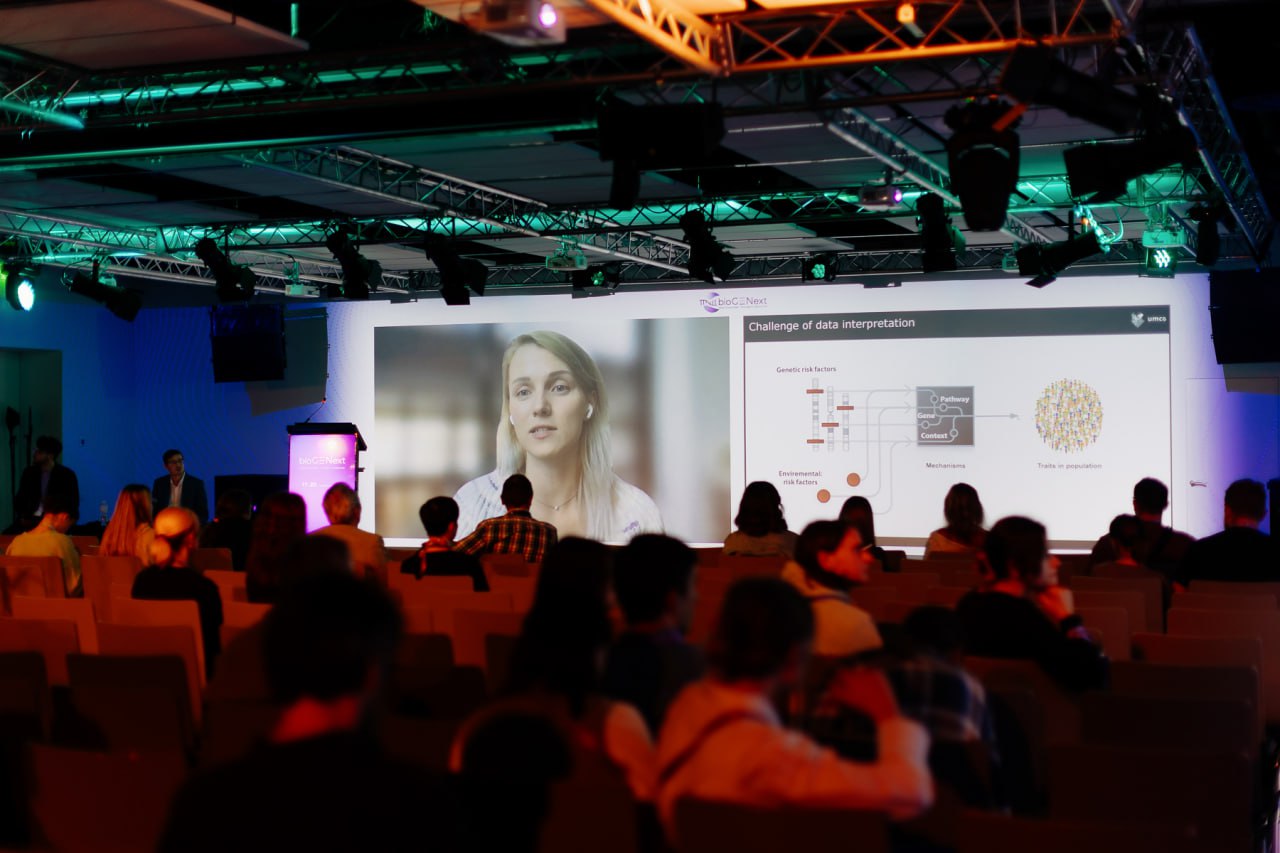
In this lecture of the bioGENext Series, Maryna Korshevniuk explored how single-cell technologies are redefining our ability to link genetic variation to function and disease. She demonstrated how modern single-cell multi-omics approaches move beyond genome-wide association signals to reveal how genetic variants shape regulatory landscapes in specific cell types, cellular states, and biological contexts. The lecture highlighted the integration of transcriptomic and epigenomic layers to achieve context-specific resolution, as well as the use of functional genomics frameworks to translate statistical associations into mechanistic insights. Particular emphasis was placed on large-scale QTL mapping, including the identification of cell-type- and state-specific eQTLs and caQTLs, fine-mapping of causal variants, and linking regulatory variation to disease biology. Overall, the lecture illustrated how single-cell multi-omics is redefining functional genomics and opening new avenues for precision and truly personalized medicine.
The session covered:
Single-cell multi-omics: integrating transcriptomic and epigenomic layers to capture context-specific regulation at unprecedented resolution.
Functional genomics: from statistical associations to mechanistic insights that reveal how variants influence gene regulation and pathways.
QTL mapping at scale: discovering cell-type- and state-specific eQTLs and caQTLs, fine-mapping causal variants, and connecting them to disease biology.
Watch the lecture to see how these approaches are reshaping the future of biomedical discovery and inspiring a new era of truly personalized medicine.
BioGENext Series: Maryna Korshevniuk "Unravelling Genetic Variants at Single-Cell Resolution"